
Plenary Lecture – tuesday, 2nd of July 2026
From 3D Scan to Clinical Outcome: What Actually Works in Digital Human Modeling in Orthotics & Prosthetics
Abstract
This lecture presents a real-world, industry-driven perspective on the application of Digital Human Modeling (DHM) in orthotics and prosthetics.
While DHM is often associated with advanced tools such as 3D scanning, pressure measurements, and digital workflows, the reality in clinical practice is more complex. A 3D scan alone is rarely sufficient to produce a clinically effective outcome. Instead, it serves as one of several input parameters that must be interpreted, corrected, and combined with clinical expertise.
The lecture will walk through the full patient pathway: from assessment (including 3D scanning, gait analysis, and manual examination) to digital 3D modeling, manufacturing, and follow-up. Special focus will be given to the decision-making process—when digital data can be trusted, when it must be modified, and when traditional (“low-tech”) methods outperform advanced technologies.
Key insights include:
- The gap between raw digital data and clinically usable models.
- Limitations of templating and library-based approaches.
- The importance of clinician-driven corrections in digital workflows.
- Where DHM adds real value—and where it does not.
- Practical “pain points” from industry that require research support.
The goal of this lecture is to bridge the gap between academia and industry by showing what truly works in practice—and where future collaboration is needed.
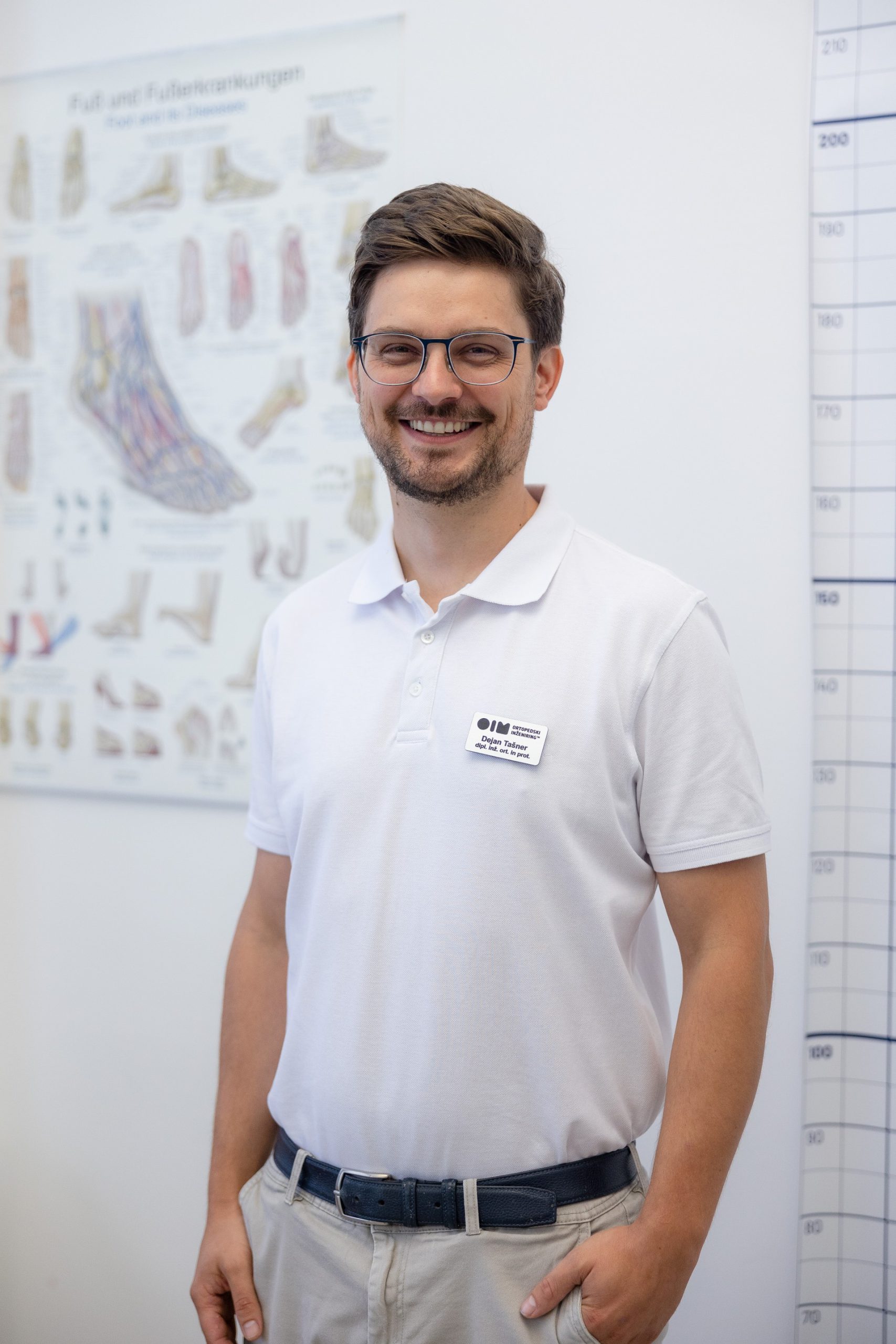
Dejan Tašner
Certified Orthotist and Prosthetist / Director of OIM ortopedski inženiringDejan Tašner is a certified orthotist and prosthetist and the director of OIM ortopedski inženiring, a Slovenia-based company specializing in custom orthotic insoles, orthopedic footwear, and lower-limb prosthetics.
His work focuses on integrating clinical expertise with advanced digital technologies, including 3D scanning, CAD/CAM design, and additive manufacturing. Under his leadership, OIM has developed a highly digitalized workflow; however, clinical results still depend heavily on hands-on work and manual corrections, as technology alone is not sufficient to achieve optimal patient outcomes.
Dejan is actively involved in bridging the gap between clinical practice, engineering, and industry, with a particular focus on scalable yet clinically reliable solutions in orthotics and prosthetics.