
Plenary Lecture – Friday 3th of July 2026
Decoding the Neural Codes of Movement: Skeletal Muscles as Biological Amplifiers for Digital Human Twins
Abstract
The human motor system is a sophisticated network that seamlessly integrates diverse sensory information and cognitive decisions into the integral of movement. In this process, skeletal muscles act as biological amplifiers, spreading electrophysiological information across the body and amplifying it by a factor of 1000. As such, they provide a high-quality window into the motor system functioning.
Over the last two decades, our ability to capture neural information has evolved from invasive procedures to sophisticated non-invasive high-density electromyographic (HD-EMG) and unobtrusive (epidermal electronics) systems. These technologies, coupled with advanced decoding algorithms, enable us to translate raw measurements into the fundamental neural codes that govern human motion. Because the motor system is acutely sensitive to external factors—ranging from environmental stressors such as pollution and temperature to lifestyle factors such as nutrition and immobilization—these measurements also serve as a primary indicator of our functional health.
In this talk, we will present the pioneering techniques developed by our research group that identify neural codes across isometric, dynamic, and elicited contractions (reflexes and perturbations). We will demonstrate how these measurements form a powerful synergy with Digital Human Models, providing the empirical foundation for their development, fine-tuning, validation, and exploitation. In particular, we will discuss:
- Digital Twins of Aging: Modelling the trajectory of the motor system changes as a function of daily activity and microhabitats.
- Environmental & Nutritional Impact: How different diets manifest in our neural codes.
- Clinical Insights: Decoding the effects of movement disorders and neurodegenerative diseases.
- The Future of Movement Augmentation: Leveraging neural decoding for the intuitive control of prosthetics and movement enhancement.
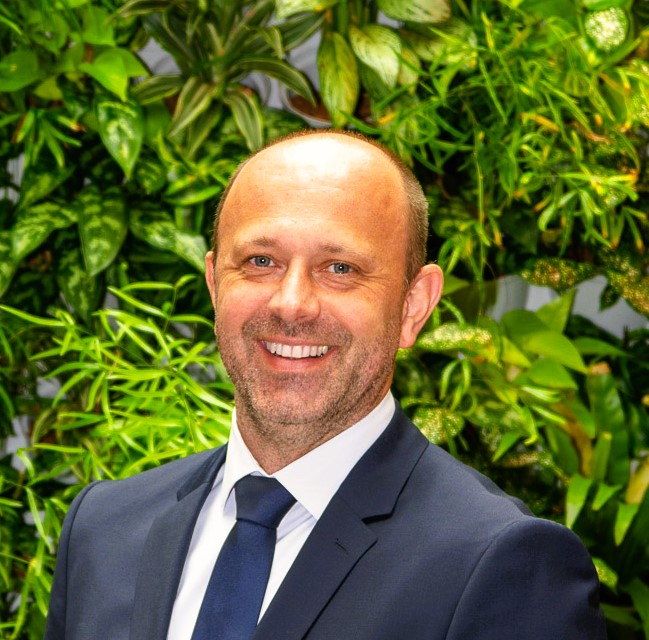
Prof. Dr. Aleš Holobar
Aleš Holobar received his BS and PhD degrees in Computer Science from the Faculty of Electrical Engineering and Computer Science (FEECS) at the University of Maribor (UM), Slovenia, in 2000 and 2004, respectively. In 1997, he joined the System Software Laboratory (SSL) at FEECS, where he was employed as a researcher and teaching assistant. From 2005 to 2009, he was with the Laboratory of Engineering of Neuromuscular System and Motor Rehabilitation at Politecnico di Torino, Italy, with support provided by Cassa di Risparmio di Torino and the Institute for Scientific Interchange Foundations (from 2005 to 2006), and by a Marie Curie Intra-European Fellowship within the 6th European Community Framework Programme (from 2006 to 2009). In 2009, he returned to FEECS at the University of Maribor, where he currently holds a full professor position. He is the head of the System Software Laboratory and the Institute of Computer Science at FEECS.
His main research interests include digital signal processing and feature learning, with current activities focused on source separation, human-machine interfaces, biomedical signal processing, and rehabilitation engineering. He (co)authored 5 patents, 118 peer-reviewed journal papers, 4 book chapters, and more than 130 conference contributions. He has co-organized more than 70 international workshops and seminars on the decomposition of compound signals, time-frequency analysis, and the extraction of information from noninvasively acquired biomedical signals.
He is a member of IEEE, ACM, IAPR, SATENA, Slovenian Society of Pattern Recognition, Slovenian Society for Medical and Biological Engineering, and an ISEK fellow.
The presented research work was funded by the European Union’s Horizon Europe Research and Innovation Program (HybridNeuro project, GA No. 101079392, SLAIF project), by the UK Research and Innovation (UKRI) government’s Horizon Europe funding guarantee scheme under grant agreement No. 10052152, and by the Slovenian Research and Innovation Agency (projects J2-60046 and J2-70103 and programme P2-0041). Slovenian AI factory (SLAIF) has been funded by the Ministry of Higher Education, Science and Innovation of the Republic of Slovenia. At a call by EuroHPC JU, the SLAIF project has received a positive funding decision under Horizon Europe and Digital Europe Programme. Views and opinions expressed are however those of the author(s) only and do not necessarily reflect those of the European Union or Research Executive Agency. Neither the European Union nor the granting authority can be held responsible for them.